

Executive Coaching in Charlotte
World-class coaching for leaders in the nation’s second-largest banking center. JMG brings proven methodology to financial services, energy, and manufacturing executives driving the Southeast’s fastest-growing economy.
Schedule Your Strategic SessionFeatured In


Leadership Challenges Facing Charlotte Executives
Every market has its own leadership context. Here are the challenges that make Charlotte distinct.
AI-Driven Workforce Transformation in Banking
Charlotte’s biggest employers are aggressively adopting AI. Bank of America spends $4 billion annually on new technology and credits AI with reducing coding work by 30%. An estimated 165,000 Charlotte-area jobs (roughly 13% of the local workforce) could be affected by AI automation by 2027. Executives must lead workforce transitions, reskill teams, and maintain morale while implementing technologies that eliminate traditional roles, particularly in customer service, teller operations, and back-office processing.
Corporate Restructuring and Identity at Scale
Truist’s $15.5 billion insurance division sale and refocusing on core banking, Honeywell’s planned three-way split, and ongoing consolidation across financial services mean Charlotte executives are frequently leading through major structural change. These leaders must maintain employee engagement, retain key talent, and deliver results while organizational identity, reporting structures, and strategic priorities shift beneath them.
Talent Competition in a Concentrated Financial Sector
Charlotte’s deep bench of banking headquarters creates intense competition for the same talent pool. Finance and insurance occupations grew 52% since 2015, but demand outpaces supply. Banks have become "a factory for executives going to other institutions," according to industry analysts. Leaders must develop compelling retention strategies that go beyond compensation, building cultures that keep top performers from walking across uptown Charlotte to a competitor.
Bridging the Economic Mobility Gap
Charlotte was once ranked dead last among the 50 largest U.S. metros for upward economic mobility. While the city has climbed to #38 and ranks third nationally among most improved cities, significant disparities persist: 18% of Black residents and 25% of Hispanic residents live in poverty versus 7% of white residents. Executives, especially those in Charlotte’s dominant financial services sector, face growing expectations from boards, investors, employees, and communities to address equity through hiring, development, and community investment.
Managing Growth Without Losing Culture
Charlotte absorbed 962,000 new residents between 2001 and 2025, with the region projected to nearly double. Corporate relocations (Honeywell from New Jersey, Maersk from elsewhere, JPMorgan expansion) bring executives who import leadership styles from other markets. Leaders must integrate diverse perspectives while preserving Charlotte’s collaborative, relationship-driven business culture. The influx also strains infrastructure, housing affordability, and transportation, all of which impact workforce planning and employee satisfaction.
Why Charlotte Leaders Choose John Mattone Global
Deep Financial Services Coaching Experience
JMG has coached C-suite executives at major financial institutions worldwide, providing the regulatory awareness, risk management perspective, and digital transformation insight that Charlotte’s banking leaders need. In the nation’s second-largest banking center, coaching must address the intersection of compliance, innovation, and talent strategy. JMG’s methodology delivers exactly this combination.
Restructuring and Change Leadership Expertise
Charlotte’s environment of mergers, divestitures, and corporate splits demands coaching that addresses the human side of structural change. JMG’s Intelligent Leadership® methodology helps executives maintain team cohesion when organizational identity is shifting, communicate vision during uncertainty, and retain high performers who have abundant options in Charlotte’s competitive market.
Talent Retention in a Competitive Corridor
When your top talent can literally walk to a competitor’s headquarters, retention strategy becomes a leadership imperative. JMG develops the emotional intelligence, team-building capacity, and culture-creation skills that keep high performers engaged. With 6 of the world’s top 20 executive coaches, JMG brings a depth of perspective that matches the caliber of leadership Charlotte’s Fortune 500 companies demand.
Growth-Market Integration Support
Charlotte’s rapid population growth and corporate relocation boom mean executives regularly manage the challenge of integrating new leadership perspectives with established local culture. JMG’s coaching accelerates this integration, helping relocated executives build networks, adapt their leadership style, and establish credibility in Charlotte’s relationship-oriented business community.
Igniting Breakthrough Leadership Performance & ROI
John Mattone Global's coaching doesn't just promise growth. It delivers measurable, transformative change. By leveraging our exclusive LeaderWatch® tool, we track real, quantifiable improvements.
Agility with Change & People
Improvement
Creativity & Innovation
Improvement
Building & Sustaining a Positive Team Culture
Improvement
One-On-One Communications
Improvement
Overall Leadership
Improvement
6 of the World's Top 20 Executive Coaches. One Firm.
Global Gurus 2026 rankings. More top-20 coaches than any other firm in the world.
 #1
#1John Mattone
 #2
#2Dr. Aldo Civico
 #5
#5Mark Nation
 #9
#9Dr. Barbara Dalle Pezze
 #10
#10Dr. Vincent Pieterse
 #16
#16Puja Talesara
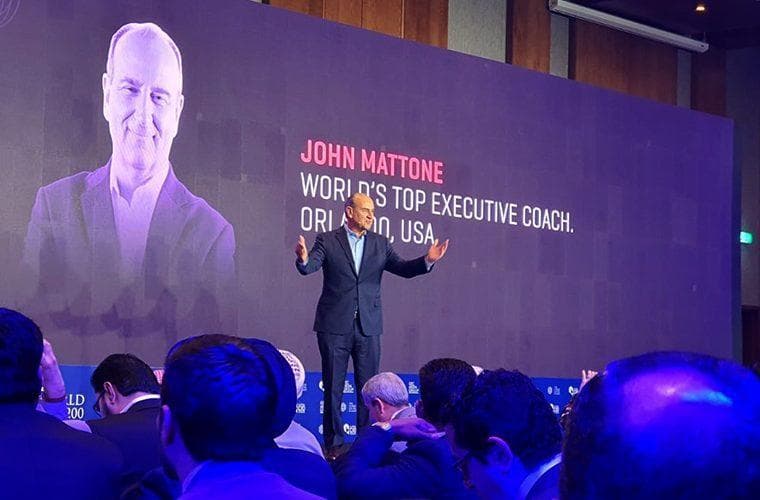
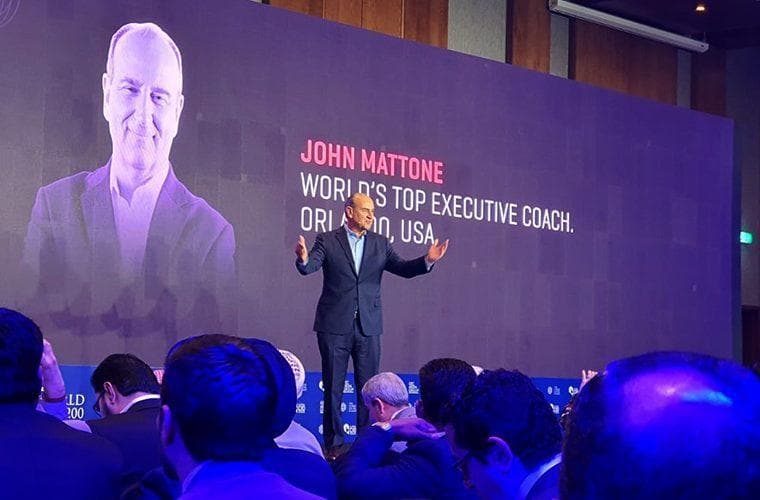
John Mattone & Intelligent Leadership®
John Mattone is the world's #1 ranked executive coach by Global Gurus, a distinction he has held seven times. His proprietary Intelligent Leadership® methodology combines inner-core development (values, character, mindset) with outer-core skills (strategy, communication, execution) to produce measurable, lasting transformation.
JMG's approach is built on proprietary tools like the MLEI® and STLI-360® assessments, which give leaders a data-driven baseline and a clear roadmap for growth. Combined with the LeaderWatch® tracking system, every coaching engagement delivers documented, quantifiable results.
Learn About Intelligent LeadershipWhy Charlotte Leaders Choose JMG
Charlotte’s economy generates an estimated $170 billion or more in gross metropolitan product, making it one of the largest economic engines in the Southeast. The metro area is home to 7 Fortune 500 companies and 19 Fortune 1000 companies, spanning financial services, energy, manufacturing, and consumer goods. With $1.4 billion in new investments and 7,000+ new jobs on the horizon for 2026, Charlotte is ranked among the top cities nationally for economic performance. North Carolina was named "2025 State of the Year for Economic Development," and Charlotte is the state’s primary economic driver.
Key Industries
Major Companies
Looking for corporate leadership training programs in Charlotte?
View Charlotte Leadership Training ProgramsSchedule Your Consultation
Book directly with Nicholas Mattone or Trevor Maloney. No sales pitch, just actionable insight on your highest-impact leadership lever.

Nicholas Mattone
CEO of JMG | Executive coach and leadership strategist

Trevor Maloney
Chief Growth Officer | IL Master Coach and advisor to global C-suites
Frequently Asked Questions
Why is Charlotte considered a top market for executive coaching?
Charlotte is the second-largest banking center in the United States, home to 7 Fortune 500 companies and 19 Fortune 1000 companies, with a combined economic output exceeding $170 billion. The concentration of major headquarters (Bank of America, Truist, Duke Energy, Honeywell, Nucor, Lowe’s) creates intense demand for high-caliber leadership across financial services, energy, manufacturing, and technology. The city’s rapid growth, with 2.55% annual population increase and $1.4 billion in projected new investment for 2026, means organizations are constantly onboarding new leaders, restructuring teams, and scaling operations. Executive coaching helps Charlotte leaders manage the complexities of leading in a financial capital where regulatory sophistication, digital transformation, and talent retention determine competitive advantage.
What makes executive coaching needs in Charlotte different from other North Carolina cities like Raleigh or Durham?
Charlotte and the Research Triangle serve fundamentally different economic ecosystems. Charlotte’s leadership challenges center on financial services regulation, large-scale corporate restructuring (such as Truist’s strategic refocusing or Honeywell’s three-way split), and managing in the nation’s second-largest banking center. Durham and Raleigh’s challenges revolve around biotech commercialization, university-to-industry transitions, and early-stage tech leadership. Charlotte executives typically lead at Fortune 500 scale with thousands of direct and indirect reports, complex compliance requirements, and board-level stakeholder management. Coaching in Charlotte often addresses AI-driven workforce transformation in banking, cross-functional leadership during mergers and restructurings, and building retention strategies in a market where competitors for executive talent sit within walking distance.
How does Charlotte’s role as the #2 U.S. banking center shape its leadership development priorities?
The density of financial institutions in Charlotte (Bank of America, Truist, Wells Fargo, JPMorgan Chase, Citigroup) creates a leadership environment unlike almost any other U.S. city. Executives must balance regulatory rigor with innovation, particularly as AI transforms banking operations. Bank of America alone spends $13 billion annually on technology, and the entire sector is racing to automate while maintaining customer trust. This creates coaching priorities around leading digital transformation without losing the human touch, managing regulatory expectations during rapid technology adoption, and developing the next generation of leaders who can operate at the intersection of finance and technology.
What leadership challenges do Charlotte executives face during periods of corporate restructuring?
Charlotte has experienced an unusual concentration of major corporate restructurings in recent years. Honeywell is splitting into three separate companies (expected completion in late 2026), with its automation business retaining the Charlotte headquarters. Truist sold its $15.5 billion insurance division and reduced headcount by nearly 25% to refocus on core banking. These are not isolated events; they reflect broader trends of portfolio optimization and strategic simplification happening across Charlotte’s corporate environment. Executives leading through these transitions need coaching to maintain team cohesion when organizational identity is shifting, communicate vision during uncertainty, retain high performers who have abundant options, and develop personal resilience while managing the emotional toll of large-scale change on their teams.
How does Charlotte’s rapid population growth affect executive leadership and talent strategy?
Charlotte’s metro area has added nearly one million residents since 2001, with projections showing the region could nearly double in the coming decades. The 20-34 age demographic grew 19% since 2015, and the foreign-born population increased 43%, creating a more diverse and dynamic workforce. For executives, this growth presents both opportunity and complexity. Leaders must build inclusive cultures that attract and retain talent from increasingly diverse backgrounds, develop scalable systems and processes as organizations grow, and address workforce challenges like housing affordability and transportation infrastructure that affect employee recruitment and retention. Charlotte’s cost-of-living advantage over New York and San Francisco makes it attractive for corporate relocation, but incoming executives often need coaching to adapt their leadership style to Charlotte’s collaborative, relationship-oriented business culture.