

Executive Coaching in Pittsburgh
World-class coaching for leaders managing one of America’s most compelling reinvention stories. JMG brings proven methodology to healthcare, AI, financial services, and advanced manufacturing executives.
Schedule Your Strategic SessionFeatured In


Leadership Challenges Facing Pittsburgh Executives
Every market has its own leadership context. Here are the challenges that make Pittsburgh distinct.
Leading Through Industrial Identity Transformation
Pittsburgh’s "Steel City" identity is both an asset and a burden. The Nippon Steel acquisition of U.S. Steel epitomizes this challenge: the company retained its name and Pittsburgh headquarters, but is now led within a Japanese global steelmaking strategy focused on advanced technologies and decarbonization. Leaders across the region must manage multi-generational workforces where veteran employees carry deep institutional knowledge from the manufacturing era while younger hires bring digital-first expectations. The United Steelworkers union remains a powerful force, and executives who can bridge legacy culture with innovation are in high demand.
Competing for AI and Robotics Talent Against Coastal Markets
Carnegie Mellon produces some of the world’s most sought-after AI, robotics, and computer science graduates, but Pittsburgh must compete with Silicon Valley, Seattle, and New York for that talent. While the region’s 140+ robotics companies and 13,000+ AI/robotics employees create critical mass, Google, Meta, Apple, and Amazon also recruit aggressively from CMU. Average tech cluster salaries ($100,129) remain significantly below San Francisco or New York levels. Leaders face the challenge of building compelling career narratives that build on Pittsburgh’s unique strengths: lower cost of living, proximity to world-class research, and meaningful "deep tech" work.
managing Healthcare System Dominance
UPMC’s 100,000-employee, $30-billion enterprise dominates the regional economy in a way few single organizations do in any American metro. One in five Pittsburgh jobs is in healthcare. For non-healthcare executives, the talent competition with UPMC is fierce. For healthcare leaders, managing within a system of this scale requires managing complex stakeholder relationships, regulatory environments, and the tension between UPMC’s nonprofit mission and its for-profit insurance and international divisions. The ongoing rivalry between UPMC and Highmark/Allegheny Health Network adds competitive dynamics that affect the entire region.
Managing the Energy Transition
Pittsburgh sits at the intersection of America’s fossil fuel past and clean energy future. EQT Corporation (the nation’s largest natural gas producer), CONSOL Energy, and legacy coal operations represent the existing energy economy, while GE Vernova’s $100M+ investment in clean grid technology and U.S. Steel’s decarbonization commitments represent the emerging one. Executives must manage the transition from extraction-based business models to renewable and clean technology while maintaining employment, community stability, and profitability.
Reversing Population Decline and Retaining Young Talent
The Pittsburgh MSA has lost nearly 4% of its population since 2000 and 15.3% since 1970. Pittsburgh produces 45,000 graduates annually from 88 institutions, but many leave for larger markets. The challenge for executives is threefold: build organizations that are magnets for early-career talent, create compelling career trajectories that keep mid-career professionals from relocating, and develop succession plans that account for an aging regional workforce. Pittsburgh’s cost-of-living advantage and quality-of-life assets are powerful tools, but they require active integration into talent strategy.
Why Pittsburgh Leaders Choose John Mattone Global
Transformation and Reinvention Coaching
Pittsburgh’s ongoing transformation from steel capital to healthcare, AI, and financial services hub demands coaching that addresses change at every level: organizational, cultural, and personal. JMG’s Intelligent Leadership® methodology builds the strategic resilience, stakeholder management, and adaptive leadership skills needed to guide organizations through reinvention. With experience coaching Fortune 500 executives through mergers, restructurings, and industry shifts, JMG understands the dynamics Pittsburgh leaders face.
Cross-Industry Leadership Development
Pittsburgh’s "distributed technology model" means leaders must operate across traditional boundaries: healthcare + AI, manufacturing + robotics, finance + technology. JMG’s cross-sector coaching experience helps executives develop the versatility to lead in environments where industries converge. This is particularly valuable in Pittsburgh, where a PNC leader might collaborate with CMU researchers, a UPMC executive might partner with a robotics startup, and a PPG manager might integrate AI into chemical processes.
Talent Retention in a Competitive Market
With 10 Fortune 500 companies and 140+ robotics firms competing for talent, Pittsburgh’s retention challenge is acute. JMG’s coaching develops the emotional intelligence, culture-building capacity, and purpose-driven leadership skills that keep high performers engaged. With 6 of the world’s top 20 executive coaches, JMG provides the caliber of development that Pittsburgh’s best leaders expect and its organizations need to retain them.
Legacy-to-Innovation Bridge Building
Few cities embody the tension between industrial heritage and technological innovation like Pittsburgh. JMG helps executives manage multi-generational workforces, maintain trust with organized labor, and articulate future visions that honor institutional legacy while driving modernization. This coaching develops leaders who can hold complexity, bridging the gap between steelworkers and software engineers, union contracts and startup cultures.
Igniting Breakthrough Leadership Performance & ROI
John Mattone Global's coaching doesn't just promise growth. It delivers measurable, transformative change. By leveraging our exclusive LeaderWatch® tool, we track real, quantifiable improvements.
Agility with Change & People
Improvement
Creativity & Innovation
Improvement
Building & Sustaining a Positive Team Culture
Improvement
One-On-One Communications
Improvement
Overall Leadership
Improvement
6 of the World's Top 20 Executive Coaches. One Firm.
Global Gurus 2026 rankings. More top-20 coaches than any other firm in the world.
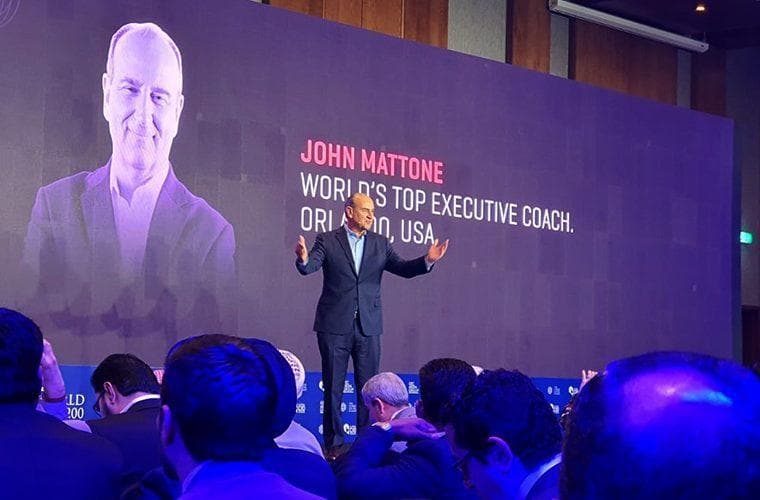 #1
#1John Mattone
 #2
#2Dr. Aldo Civico
 #5
#5Mark Nation
 #9
#9Dr. Barbara Dalle Pezze
 #10
#10Dr. Vincent Pieterse
 #16
#16Puja Talesara
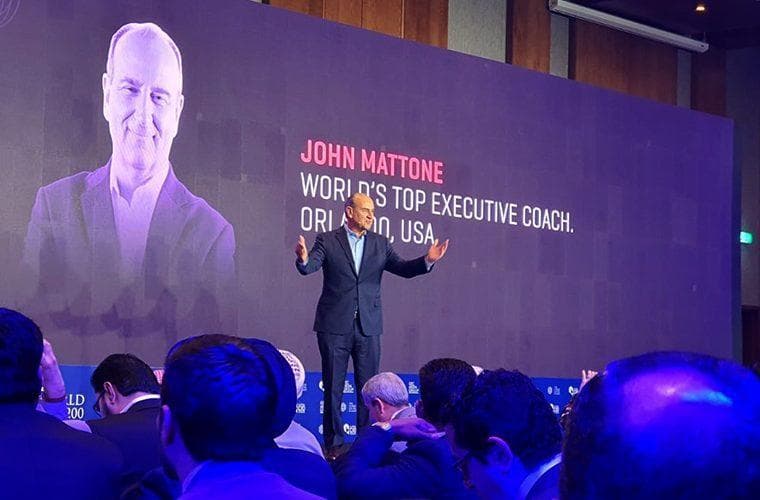
John Mattone & Intelligent Leadership®
John Mattone is the world's #1 ranked executive coach by Global Gurus, a distinction he has held seven times. His proprietary Intelligent Leadership® methodology combines inner-core development (values, character, mindset) with outer-core skills (strategy, communication, execution) to produce measurable, lasting transformation.
JMG's approach is built on proprietary tools like the MLEI® and STLI-360® assessments, which give leaders a data-driven baseline and a clear roadmap for growth. Combined with the LeaderWatch® tracking system, every coaching engagement delivers documented, quantifiable results.
Learn About Intelligent LeadershipWhy Pittsburgh Leaders Choose JMG
Pittsburgh’s metro area generates approximately $194 billion in gross domestic product, ranking it among the 30 largest metropolitan economies in the United States. The region is home to a record 10 Fortune 500 companies as of 2025, the most since Fortune expanded its methodology in 1995. This concentration of corporate headquarters, from financial services to advanced manufacturing to pharmaceuticals, creates a diverse executive talent pool and steady demand for high-caliber leadership development. The Nippon Steel acquisition of U.S. Steel, which closed in June 2025 with commitments of $11 billion in new investments, signals that Pittsburgh’s industrial legacy continues to attract global capital even as the economy diversifies.
Key Industries
Major Companies
Schedule Your Consultation
Book directly with Nicholas Mattone or Trevor Maloney. No sales pitch, just actionable insight on your highest-impact leadership lever.
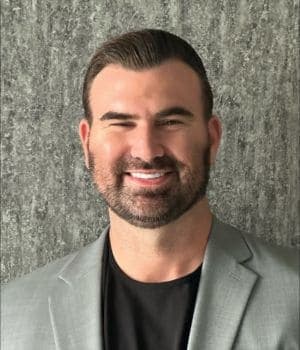
Nicholas Mattone
CEO of JMG | Executive coach and leadership strategist

Trevor Maloney
Chief Growth Officer | IL Master Coach and advisor to global C-suites
Frequently Asked Questions
Why is Pittsburgh considered a strong market for executive coaching?
Pittsburgh is home to 10 Fortune 500 companies (a record for the region), a $194 billion metro economy, and some of the most dynamic industry transitions happening in any American city. The region’s transformation from steel capital to healthcare, AI, and financial services hub has created a leadership environment where executives constantly manage change: integrating legacy and modern workforces, competing for world-class talent, and leading organizations through sector-wide reinvention. With UPMC employing 100,000 people, PNC managing $569 billion in assets, and 140+ robotics companies pushing the boundaries of automation, Pittsburgh executives operate at the intersection of tradition and innovation.
What industries in Pittsburgh create the strongest demand for executive coaching?
Healthcare is the largest single driver, with UPMC and Highmark/Allegheny Health Network together employing over 130,000 people. Financial services (PNC, BNY Mellon) create demand for leaders managing digital transformation and coast-to-coast expansion. The robotics and AI sector (140+ companies, 13,000+ employees) requires leaders who can translate cutting-edge research into commercially viable products. Advanced manufacturing and energy executives face the unique challenge of managing workforce transitions as legacy industries adopt new technologies. Pittsburgh’s tech sector, generating $27.5 billion in annual payroll, demands leaders who can attract and retain talent in competition with coastal markets.
How does Pittsburgh’s steel-to-tech transformation affect leadership development priorities?
Pittsburgh’s economic reinvention is ongoing, not complete. Leaders must simultaneously respect the region’s industrial heritage (the United Steelworkers union, legacy manufacturing operations, deeply rooted community institutions) while accelerating adoption of AI, robotics, and digital technologies. The Nippon Steel acquisition of U.S. Steel, with $11 billion in committed investments and requirements to maintain Pittsburgh headquarters, illustrates this duality. Coaching priorities often include bridging generational and cultural divides within organizations, leading through ambiguity as industries converge, and developing the emotional intelligence to maintain trust with diverse stakeholders.
How does Carnegie Mellon University’s presence shape the executive environment in Pittsburgh?
Carnegie Mellon’s influence on Pittsburgh’s economy is difficult to overstate. The university’s #1-ranked AI graduate program, its Robotics Institute (the world’s first), and its role in spawning companies like Duolingo, Aurora Innovation, and Astrobotic have fundamentally reshaped the region’s talent pool and industry composition. Major tech companies (Google, Apple, Meta, Amazon, Bosch) established Pittsburgh R&D offices specifically to access CMU talent. For executives, this creates both the opportunity to recruit from one of the world’s best engineering talent pipelines, and the challenge of competing with well-funded tech giants for that same talent.
What role does Pittsburgh’s cost-of-living advantage play in executive talent strategy?
Pittsburgh’s cost of living sits approximately 2% below the national average, with housing costs 7% below, making it dramatically more affordable than comparable innovation hubs like San Francisco, Boston, or New York. A $100,000 salary in Pittsburgh delivers purchasing power roughly equivalent to $135,000 to $150,000 in San Francisco. For employers, competitive compensation packages cost less in absolute terms. However, Pittsburgh’s population decline means this cost advantage alone is not sufficient to attract and retain talent. Leaders must pair the economic argument with compelling career narratives, strong organizational cultures, and meaningful work that attracts purpose-driven professionals.