
How to Become an Executive Coach: From Operator to Trusted Coach
You have run the P&L and led the restructuring. This is the honest path from senior operator to credentialed executive coach.
You have led for decades. Why do you still need a coaching certification?
You have run the P&L, led the restructuring, and sat in the rooms where careers were decided. Now the question has changed. Not "what is my next role?" but "what is my second act?"
Decades of leading people are the raw material of an executive coaching career. They are not yet the craft. This page lays out the honest path to becoming an executive coach: the steps anyone must take, what legitimacy actually requires, and how senior leaders walk that path at executive tier through the Intelligent Leadership Executive Coaching Certification.
You need a coaching certification because leadership experience and coaching skills are two different assets. Leading is deciding and directing. Coaching is a trained craft: asking instead of telling, contracting outcomes, and evaluating progress against the ICF core competencies, which cover ethical guidelines, presence, and active listening. Certification proves you have made that shift, in a field where no proof is required to claim the title.
That last point matters. Coaching is unregulated. No license, no degree, no minimum standard stands between a weekend enthusiast and the word "coach" on a LinkedIn profile. Business leaders evaluating executive coaching know this, which is why they screen hard for credentials and method.
"You are not an imposter for lacking coach training after 30 years of leading. You would only be one for skipping it."
This is the imposter question answered head-on. Certified executive coach status is how a serious operator separates from the noise, so you are never lumped in with untrained life coaches. Character drives competence; the coaching skills still have to be learned.
What are the actual steps to become a certified executive coach?
Becoming a certified executive coach takes five steps: complete an ICF-accredited executive coach training program, receive mentor coaching, log real client coaching hours, pass a performance evaluation, and apply for an ICF credential (ACC or PCC). No school can skip these steps for you; the International Coaching Federation sets them for everyone.
Complete accredited coaching education.
Train through an ICF-accredited executive coach training program. Accreditation means the curriculum, faculty, and evaluation meet the ICF's published standards, not a school's own marketing.
Receive mentor coaching.
The ICF requires 10 hours of mentor coaching: an experienced coach observing your coaching and giving structured feedback against the ICF core competencies.
Log client coaching hours.
The ACC credential requires 100 hours of coaching experience; the PCC requires 500. These are earned with real clients, over months.
Pass a performance evaluation.
You submit recorded coaching sessions for assessment against the ICF markers. This is where instinct and war stories stop being enough.
Apply for your ICF credential.
Submit your education, hours, mentor coaching, and evaluation to the ICF, and pass the ICF credentialing exam. The Master Certified Coach (MCC) tier comes later, after 2,500 client hours.
An ICF certification also has to be maintained: credentials renew every three years, with 40 hours of continuing education through CCE-approved courses.
Timeline honesty: coach training itself can be completed in months, but the full path to an ICF credential typically runs 12 to 24 months once client hours are counted. Programs promising a faster route are blurring the ICF's own requirements. The full timeline is broken down in how long it takes to become an executive coach, and the credential system itself in what certifications coaches need. Choosing the right executive coach certification decides how much of this path is supported inside one program: the strongest coaching education folds mentor coaching and evaluation into the progression instead of leaving you to assemble them alone.
What does legitimacy require, beyond the steps?
Legitimacy as an executive coach rests on three assets the steps alone do not supply: a proven method for what happens in the room, a credential recognized by corporate buyers, and a peer group that signals your tier. Senior leaders who secure all three enter the market as trusted coaches, not career changers with a certificate.
Executive coach certification programs deliver the steps. These three assets are what make you credible to the executives and boards you intend to serve, and they are what the Master Journey, the full Intelligent Leadership certification progression, is built to deliver.
A method, not a blank page
The deepest fear of the experienced operator is winging it: sitting across from a CEO with nothing but instinct and war stories. The Intelligent Leadership method removes the blank page. You work from the Wheel of Intelligent Leadership, coaching the inner core (character, values, self-concept) and the outer core (the competencies everyone can see), driving inside-out transformation instead of surface behavior fixes.
You are also trained to administer and debrief the Mattone Leadership Enneagram Inventory (MLEI), the proprietary assessment with 9 leadership profiles trusted by leaders including Apple's Steve Jobs, alongside the STLI-360: assessment tools you can bring into client work from the start. You never invent a methodology from scratch. You carry one that took 30 years to build.
A credential built for corporate doors
This executive coach certification is ICF CCE-approved, with 150 ICF CCE units on the path to Master Level plus 42 optional (192 total), one of the deepest curricula in the executive tier. The program's ICF CCE-approved curriculum covers the 125-hour education requirement for the Professional Certified Coach (PCC) via the Portfolio Path. Mentor coaching support and practical evaluation are built into the coaching journey, designed for busy executives rather than career students.
The Master Journey begins with Level 1, the Initial Mastery Certification: a 3-day immersive program taught personally by John Mattone, earning 22.25 ICF CCE units. From there the journey continues through Advanced Mastery toward the Intelligent Leadership Master Coach designation. The full progression is mapped on the certification hub.
 1
1Level 1: Initial Mastery
3-day immersive, $2,500
 2
2The Master Journey
Advanced mastery and mentor coaching
 3
3IL Master Coach
150+ member inner circle
One ladder: 150 ICF CCE units to Master Level, plus 42 optional (192 total). See the full Master Journey
A peer group at your level
The fear of being "just another life coach" is answered by the room itself. You join a global network of 800+ certified coaches in 55+ countries: former executives, experienced coaches holding PCC and MCC credentials, and senior practitioners. The IL methodology produced six of the world's top 20 executive coaches on the 2026 Global Gurus list. Hear what certified coaches say about the program.
Ranked the world’s #1 executive coach, six times (2019-2026)
Global Gurus, 2026
Coaches certified in the Intelligent Leadership method
JMG certification records, 2026
Countries with certified IL coaches
JMG certification records, 2026
ICF CCE units in total: 150 toward Master Level plus 42 optional
ICF CCE approval; breakdown confirmed by John Mattone, 2026-07
Will a second-act executive coaching practice pay for itself?
A second-act executive coaching practice pays for itself through three levers: an ICF credential that keeps you eligible for corporate coaching engagements, a proprietary assessment (the MLEI) you are trained to administer within client work, and a network you spent decades building that no new coach can replicate.
Start with the fear underneath the question: where do clients come from? For the Encore Executive, the honest answer is that your first prospective clients are usually already in your network. Former colleagues, boards, and the operators you developed already trust you. The certification gives that trust a method and a credential to stand on.
The program also treats practice-building as part of the craft. The Intelligent Leadership Coaching Marketing Success System (ILCMSS) covers positioning, pricing, and the business development tools for turning prospective clients into paying engagements, so the business side of a coaching practice is taught rather than left to chance.
No income promises here; anyone making them is selling. What is verifiable: in executive coaching, corporate buyers increasingly screen for ICF credentials, and a named method with a named assessment gives you a concrete answer to "how do you coach?" that generic certificates cannot.
The three levers
- An ICF credential. Keeps you eligible for the corporate coaching engagements where buyers screen hardest for it.
- A proprietary assessment. The MLEI, which you are trained to administer and debrief within paid client work.
- A network no new coach can replicate. Former colleagues, boards, and the operators you developed already trust you.
Practice-building is taught, not left to chance: the ILCMSS inside the certification, and SalesMind Academy after it.
After certification: build the business
Certification answers "can you coach?" SalesMind Academy answers the question underneath every second act: "will I get clients?" It is the named business-building program that follows the credential.
- A proven sales system built specifically for coaches
- Designed for entrepreneurial second acts, not corporate sales teams
- Mindset mastery taught alongside the sales mechanics
- 32 ICF CCE units
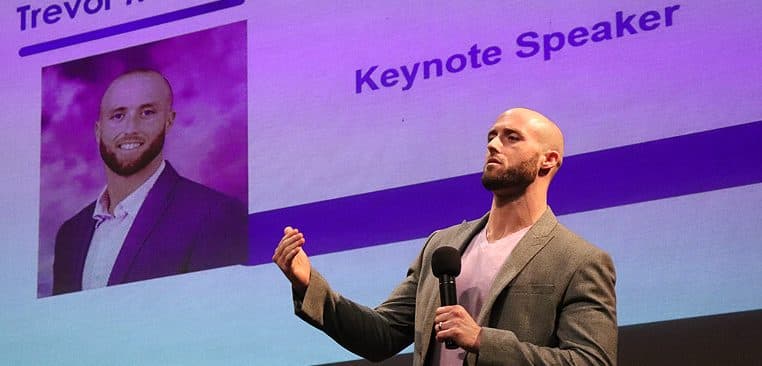
Led by Trevor Maloney, a chief revenue officer who built sales organizations from zero to millions before training coaches to do the same.
Is this program right for you?
The Intelligent Leadership Executive Coaching Certification is built for senior leaders with real organizational experience: executives, GMs, and functional heads with 10+ years leading people, plus experienced coaches moving into executive coaching. It is not built for hobbyists, or for aspiring life coaches without leadership experience.
Built for: executives, GMs, and functional heads with 10+ years leading people.
Built for: experienced coaches moving upmarket into executive coaching.
Not built for: hobbyists, or aspiring life coaches without leadership experience.
If your experience is the raw material described on this page, you will be at home in the cohort. If you are comparing this program against $500 online coaching certifications, it is not the right fit, and we would rather say so here than on a call. For the full picture of who the program serves and how the journey is structured, start with the certification overview.
Your next step
The room already trusts you. What comes next is carrying the method and the credential to match, so the trust you earned as an operator becomes the foundation of your work as a coach.
One question is worth answering before you book anything: are you willing to be a beginner again at one craft, backed by three decades of mastery in another? If the answer is yes, the path is ready.
Frequently Asked Questions
Do I need a license or degree to become an executive coach?
No. Coaching is unregulated, so no license or degree is legally required, and the ICF does not require a university degree. What corporate buyers screen for instead is an ICF credential, accredited training, and a defined methodology. That absence of regulation is exactly why an ICF certification carries so much weight in executive coaching.
Can I become an executive coach in my 50s or 60s?
Yes, and the profile is common: many program participants are senior leaders in their 50s and 60s making exactly this career transition into a second act. Decades of organizational experience are an advantage in executive coaching, where clients expect their coach to understand boardroom pressure firsthand. The certification adds the coaching craft to the experience you already carry.
What is the difference between an executive coach and a leadership coach?
Executive coaching serves business leaders at the top of organizations, such as CEOs, C-suite members, and senior teams, and ties personal growth to business outcomes. Leadership coaching is broader, focused on leadership development and leadership skills at any level. The IL method integrates both, with an executive-tier focus on inner core and outer core development.
How long does it take to become a certified coach?
Coach training itself can be completed in a few months. The full path to an ICF credential typically takes 12 to 24 months, because client coaching hours accumulate in real time. For a senior leader building a certified coach practice part-time while exiting a corporate role, 18 months from first training day to ICF credential is a realistic plan.
How much does the Intelligent Leadership certification cost?
Level 1, the Initial Mastery Certification, is a $2,500 investment. It includes the 3-day immersive program taught by John Mattone, the MLEI assessment, and 22.25 ICF CCE units, and it is the entry point to the Master Journey. Investment for the further stages is detailed on the certification FAQ page; book a call to map the right progression for you.
Who teaches the certification program?
John Mattone teaches the Level 1 program personally. He has been ranked the world's #1 executive coach six times by Global Gurus (2019-2026), coached Apple's Steve Jobs, and worked with leaders across 250+ organizations. Training in his method means learning it from its author, not from licensed materials.